Patients often ask, “why are dental implants so expensive compared to bridges?” The answer is not hidden in the implant alone. It is found in the full treatment journey. A dental implant may require three separate components: a titanium fixture, an abutment, and a custom crown. Each part must fit precisely. The procedure may also include digital scans, bone evaluation, surgical placement, healing time, and follow-up visits.
Bridges are different. They usually replace a missing tooth by using neighboring teeth for support. The process can be faster. It may also involve fewer appointments and lower laboratory costs. However, a bridge may require reshaping healthy teeth. It can also collect plaque beneath the artificial tooth. These details matter over time.
Dr. Roger P. Levin, a respected dental practice economist, explains, “Patients are not paying only for the implant; they are paying for the complete treatment process.” That process includes clinical judgment, sterile equipment, advanced training, and carefully controlled materials. It also includes planning for function, appearance, and long-term maintenance.
Still, price alone does not prove that an implant is the better choice. Patient health, bone volume, gum condition, habits, and budget all influence the decision. Sometimes, an implant is not suitable. Sometimes, a bridge is perfectly reasonable. This comparison is useful, but incomplete.
The following seven reasons explain why implant treatment often costs more than bridges. They also show what patients should ask before accepting any quoted fee.
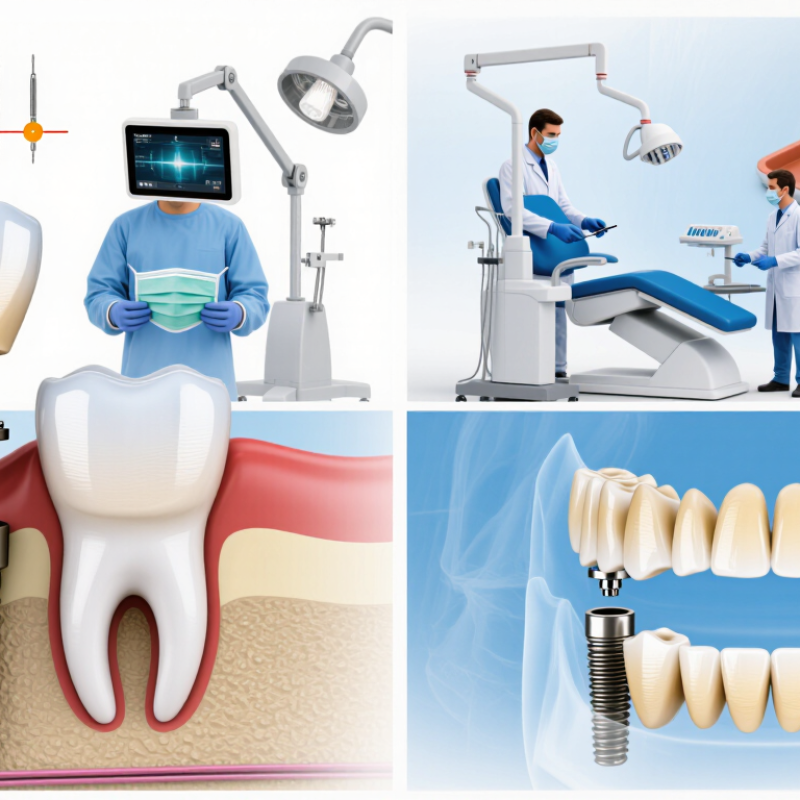
Dental implants and bridges replace missing teeth, but they do not work in the same way.
An implant uses a titanium post placed inside the jawbone. After healing, it supports an abutment and a crown that resembles a natural tooth. The bone must bond with the post, a process called osseointegration. It takes time, and healing is not guaranteed.
A bridge fills the space by attaching an artificial tooth to neighboring teeth. Those supporting teeth are reshaped, which can feel significant when they were previously healthy.
The American College of Prosthodontists estimates that about 178 million Americans are missing at least one tooth. This helps explain the demand for both treatments.
Evidence also supports careful planning: a systematic review in Clinical Oral Implants Research reported high five-year survival for implant-supported single crowns, commonly above 90%. Traditional bridges can also perform well, although their longevity depends on hygiene, bite pressure, and the condition of supporting teeth.
An implant may cost more because surgery, imaging, bone assessment, and several appointments are often required. A bridge is usually faster and less invasive. However, neither choice is automatically better. Smoking, diabetes, gum disease, and bone loss can change the recommendation. A 2022 report from the National Institute of Dental and Craniofacial Research emphasizes individualized evaluation before tooth replacement. The practical detail matters: patients should ask who provides follow-up care if discomfort or looseness develops. Prices alone do not tell the whole clinical story.
Dental implants often cost more than bridges because they replace a tooth from the root upward. Most implants use biocompatible titanium or ceramic materials, which require precise manufacturing and strict quality testing. A visible crown and connecting abutment add further costs. Bridges usually rely on neighboring teeth, so they may require fewer components and no implant fixture.
Surgery also changes the price. Dentists may use three-dimensional scans, guided planning, local anesthesia, and specialized instruments. Some patients need bone grafting before implant placement. Healing can take several months, with follow-up visits during this period. These steps require time, clinical training, and careful infection control. However, surgical complexity differs widely. Price alone is an imperfect guide. A cheaper plan may still involve later repairs or replacement.
Tips: Ask for an itemized estimate covering scans, the implant, abutment, crown, grafting, anesthesia, and follow-up care. Discuss the dentist’s experience with similar cases and the expected healing timeline. Ask what happens if the implant does not integrate properly. Do not assume the most expensive option is automatically the best one. Your bone condition, bite, oral hygiene, and long-term maintenance all influence the final cost.
| No. | Cost Factor | Why Implants Usually Cost More | Typical Implant-Related Cost in the U.S. | Typical Bridge-Related Cost in the U.S. | What the Cost May Include |
|---|---|---|---|---|---|
| 1 | Implant-grade materials | An implant treatment uses a biocompatible implant body, an abutment, and a separate crown. These components are manufactured to function within and above the jawbone, whereas a conventional bridge generally uses crowns connected to a replacement tooth. | $3,000–$6,000 per tooth | $2,000–$5,000 per bridge unit | Implant body, abutment, final crown, laboratory fabrication, and restorative appointments. Prices vary according to the material, design, and location. |
| 2 | Surgical placement | Placing an implant requires a minor surgical procedure, sterile instrumentation, local anesthesia, and post-operative monitoring. A bridge is usually prepared and fitted without placing a device into the jawbone. | $500–$2,000 of the treatment total | Usually included in preparation fees | Surgical planning, anesthesia, implant insertion, sutures when needed, and follow-up care. Complex cases may require a specialist. |
| 3 | Bone grafting or sinus augmentation | If the jawbone lacks sufficient height or thickness, additional procedures may be needed before or during implant placement. Bridges generally do not require bone support in the edentulous site. | $300–$3,000 additional | $0 in most cases | Bone-graft material, membrane, sinus-lift procedure, surgical time, and healing-related visits. The actual fee depends on the amount and location of grafting. |
| 4 | Diagnostic imaging and treatment planning | Implant placement often requires three-dimensional imaging to evaluate bone volume, nerve location, sinus anatomy, and the planned implant position. A bridge may require only standard dental radiographs in straightforward cases. | $150–$600 additional | $25–$250 additional | Dental examination, periapical or panoramic radiographs, cone-beam computed tomography when indicated, digital scans, and surgical planning. |
| 5 | Longer treatment timeline | Implants commonly involve multiple stages: extraction when necessary, healing, surgical placement, osseointegration, restoration, and follow-up. Bridges can often be completed in fewer appointments over a shorter period. | $200–$1,000 additional in related visits | $0–$500 in related visits | Temporary teeth, additional examinations, adjustment appointments, post-surgical reviews, and laboratory or chair time during the healing period. |
| 6 | Custom laboratory restoration | The final implant crown must be designed to fit the implant connection, emergence profile, bite, gum contour, and neighboring teeth. A bridge also requires laboratory work, but it typically replaces the missing tooth by using adjacent teeth for support. | $1,000–$3,000 for the restorative portion | $1,500–$4,500 for the bridge | Digital impressions or scans, shade matching, crown or bridge fabrication, ceramic or zirconia options, abutment selection, and final fitting. |
| 7 | Specialist expertise and advanced technology | Some implant cases require surgical expertise, guided placement, sedation, digital planning, or treatment by more than one dental provider. These added services increase professional and facility fees. | $500–$2,500 additional when indicated | $0–$1,000 additional when indicated | Specialist consultation, computer-guided surgery, sedation, navigation equipment, complex occlusal planning, and coordination between surgical and restorative providers. |
Cost ranges are broad, typical U.S. self-pay estimates for one missing tooth and are not fixed prices. Fees vary by region, case complexity, provider, materials, insurance coverage, and whether extraction or additional procedures are required. A conventional bridge may also require replacement in the future, while implant longevity depends on proper placement, oral hygiene, maintenance, and overall health.
One major reason dental implants cost more than bridges is the level of expertise involved. A bridge usually relies on neighboring teeth for support. An implant requires surgical placement inside the jawbone, followed by careful restorative planning. The clinician must assess bone volume, gum health, bite forces, nerve pathways, and smile proportions before treatment begins.
Small errors matter. Incorrect implant positioning can affect speech, chewing, cleaning, or the final appearance. Cone-beam imaging may help map the site in three dimensions. Bone grafting or gum treatment may also be necessary. Prosthodontic planning then determines the implant’s angle, crown shape, and contact with nearby teeth. This often involves coordinated work between surgical and restorative professionals.
The evidence supports this careful approach. A systematic review in Clinical Oral Implants Research reported approximately 96.8% five-year survival for implant-supported single crowns. However, technical complications still occurred, including loosened components and ceramic fractures. The International Team for Implantology also emphasizes structured planning, surgical training, and long-term maintenance.
Experience is not a guarantee. It is one part of risk control. Even skilled clinicians can face unexpected bone defects, healing delays, or changing bite patterns. That uncertainty is easy to underestimate. Fees therefore include diagnostic time, specialized training, surgical precision, restorative design, and follow-up care—not simply the implant itself.
Dental implants often cost more than bridges because treatment takes longer and requires more appointments. A bridge may be completed in two or three visits. An implant can involve consultation, 3D imaging, tooth removal, bone grafting, implant placement, healing checks, and final crown fitting.
Healing is the major pricing factor. The American Academy of Implant Dentistry states that bone integration commonly takes three to six months. During this period, clinicians monitor tissue healing before attaching the permanent crown. Each visit uses clinical time, surgical equipment, imaging, and laboratory work. The American College of Prosthodontists also reports that more than 178 million Americans are missing at least one tooth, making replacement planning increasingly common. More complex cases require more planning.
Appointments add up.
Tips: Ask for a written treatment timeline, including possible grafting and temporary teeth. Confirm which scans, follow-up visits, and laboratory fees are included. A lower initial quote may exclude later stages. That can feel confusing. I have found that patients understand costs better when the clinic separates surgical, healing, and restoration fees. However, timelines are never perfectly predictable. Smoking, bone quality, infection, and missed reviews can extend treatment. Discuss those risks openly before choosing an option.
Dental implants cost more than bridges because they replace the tooth root, not only the crown. Treatment may include 3D imaging, surgical placement, healing time, an abutment, and a custom crown. Bone loss can add grafting, extra visits, and laboratory fees. A bridge usually relies on neighboring teeth and may require fewer appointments. However, the invoice is only one part of the decision. The American College of Prosthodontists notes that maintenance, bone levels, smoking, hygiene, and bite forces influence outcomes. Clinical judgment matters.
Pjetursson et al.’s systematic review in Clinical Oral Implants Research reported five-year survival of 94.5% for implant-supported single crowns, versus 89.2% for conventional fixed bridges. That difference can support a higher initial fee for some patients. Yet the same review reported complication-free survival of 74.7% for implant crowns and 79.1% for bridges. That is easy to overlook. Implants are not maintenance-free. They require professional reviews, daily cleaning, and sometimes component replacement. A bridge can also last many years when supporting teeth remain healthy. Costs vary by region and case complexity, so online averages may mislead. Ask for an itemized plan covering surgery, grafting, temporary teeth, restoration, maintenance, and possible replacement. Long-term value is personal, not guaranteed.
Why long-term benefits can make implants more expensive than bridges
Illustrative U.S. estimates per missing tooth in USD. Actual fees vary by location, materials, clinical complexity, insurance, and whether additional procedures are required.
Implants require a surgical procedure to place a titanium fixture in the jaw, while bridges usually do not require implant surgery.
Implant treatment commonly includes planning, placement, healing, an abutment, and a final crown.
The jaw may need several months to integrate with the implant before the permanent restoration is completed.
Bone loss may require grafting or other preparatory treatment, adding an estimated $500–$3,000 in some cases.
Three-dimensional imaging and detailed surgical planning can add diagnostic and professional costs.
The implant, abutment, and crown are selected and fitted for one tooth, increasing laboratory and restorative work.
Implants can help preserve jawbone and avoid preparing neighboring teeth, although they still require regular professional care.
Dental implants generally have a higher upfront cost because they replace both the tooth and its root. Bridges often cost less initially, but future repairs, replacement, and maintenance may narrow the long-term difference.
A dental implant uses a titanium post placed inside the jawbone. It supports an abutment and crown after healing. The process takes time. Bone bonding is not guaranteed.
A bridge attaches an artificial tooth to neighboring teeth. Those teeth are reshaped to support the replacement. This can feel significant when they were previously healthy. It is usually faster than implant treatment.
Implants may require surgery, scans, bone assessment, and several appointments. Healing commonly takes three to six months. A bridge may need only two or three visits. Appointments add up.
Ask whether the estimate includes imaging, removal, grafting, surgery, healing reviews, and the final crown. Temporary teeth and laboratory fees should also be listed. A low starting price may exclude later stages. That can be confusing.
Yes. Bone loss may require grafting before implant placement. This can add healing time, appointments, and laboratory costs. A clinician must assess bone volume carefully. Online estimates may mislead.
Not automatically. Both options can perform well with careful cleaning and regular reviews. Implants may show strong five-year survival in suitable cases. Bridges also depend on healthy supporting teeth. Nothing is maintenance-free.
Smoking, diabetes, gum disease, bone loss, and strong bite pressure can change the plan. Missed follow-up visits may also create problems. Share your full medical history. Small details matter.
Request an itemized plan covering treatment, temporary teeth, restoration, maintenance, and possible replacement. Ask who handles discomfort or looseness later. Compare the complete pathway, not only the first invoice. I may still underestimate future costs.
Dental implants and bridges both replace missing teeth, but they differ significantly in design, procedure, and long-term performance. Implants are anchored into the jawbone, while bridges rely on neighboring teeth for support. This helps explain why are dental implants so expensive compared to bridges: implants typically require higher-quality materials, surgical placement, diagnostic planning, and custom restoration. Their treatment may also involve several stages, healing periods, and appointments, increasing both clinical time and overall costs.
Implant treatment often requires specialized expertise because it combines surgery, restorative dentistry, and careful evaluation of bone and gum health. Although bridges may offer a quicker and less expensive solution initially, they may require replacement or additional maintenance over time. Dental implants can provide stronger support, improved function, and a more natural-feeling result when properly planned and maintained. Therefore, their higher price reflects not only the procedure itself, but also the advanced materials, professional skill, treatment time, and potential long-term benefits involved.
ROA Medicare